Posts

Showing posts with the label God

Is Atheism Possible? Understanding God as Beauty or Beauty as a Proof of God
Image
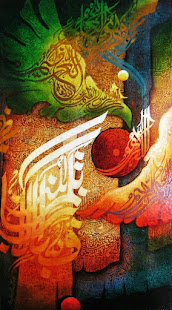
Is there an atheist in the sense that he denies not a particular model of the divine but the Sacred as such? No. No sane and intelligent man has ever been one.  An atheist denies God as the Ground of Being or Power to be, as Creativity and as Beauty. Let us try to understand one of the aspects of the Sacred as Beauty that no atheist can afford to deny.  There are degrees of tawhid and the atheist may well be in a lower rung but a degree he does possess. This is what easily follows from comprehending the traditional metaphysical doctrine of God as Reality. Ibn Arabi argued for it. Let us explore less abstruse ways of appreciating impossibility of being an atheist in the sense of denial of Sacred embodied in the Mystery, Wonder and Beauty and especially focus on the last mentioned.       Mircea Eliade, one of the most distinguished scholars of religion, has explained how man is a worshipping animal or Homo sapiens is Homo religiosus: …“sacred” is an element ...

Who doubts God? Understanding God for the Religious and the Secular Seekers

God is, according to a great medieval sage, What is. It would converge with what Ibn Arabi would call the Real and Wittgenstein would phrase as what is the case and from another angle, Simone Weil would call as “attention without distraction,” and another mystic as “choiceless awareness.” The Quranic claim that there can’t be entertained any doubt regarding Allah ( afillahi shakkun ) is echoed in an old Asante proverb stating that “No one needs to show God to a child”–the point is that some things are quite obvious. Stace has identified God with the Mystery that wells up everywhere and in everything – the depth of anything that fails to be penetrated in conceptual terms. Pannikar has identified the divine with the “dimension of more and better” of being or “the infinite inexhaustibility of any real being, its ever-open character, its mystery . . . its freedom.” For him God is a symbol for the whole reality and approvingly quotes a definition stating that “God is a circle whose centre i...

Understanding Why Innocents Suffer

One of the most knotty questions asked by all and sundry is why innocents suffer. This constitutes the most influential argument for disbelief in God. For those who believe in God or His good governance this calls for a response. And countless theologians have struggled to answer. One of the most difficult formulations of this problem – two children of the same father one dying before the age of maturity and one becoming quite old and leading a sinful life earning him hell and the later asking God why didn’t He cause him death with his brother so that he too would have escaped punishment – we find in the story of split between Mu’tazilites and Ash’arities . Much influential modern formulations of it are in Dostoevsky’s The Brothers Karamazarov through Ivan and in The Plague by Camus through Dr Rieux. In the days of coronavirus, the latter especially appears striking. The best response from a religious and metaphysical point of view is in the writings of Frithjof Schuon Shaykh Isa Nu...

Karbala's Gift of Tears

Image
  It is time to weep for Hussain(AS). If we can’t, we need to ask God for helping us. “Tears are a gift. When we don’t know or don’t remember how to shed them, we can pray for the gift of tears. We don’t know the script. We know the Giver.” It is time to know Hussain(A.S) suffered for each one of us, for all those who are denied justice. It is time to see how suffering is a gift and thank God for it. Let us unfold all these points on the day when the noblest family on earth was massacred for the noblest ideals that ennoble and redeem life.      To be human is to suffer, to grieve and to weep. It is to suffer for the sake of that which is dearer than life, to grieve for that which ideal which humans, our predecessors or we have failed to be loyal to. It is to weep for what overcomes us and undo all resistance on our part to the decimating embrace of God/Spirit.       God made us humans and not angels. Not to weep in the name of some spiritual or my...

Who is not Religious or Secular?

Angels greet all of us though we are often absent to return the same. The best or most influential minds happen to transcend simplistic construction and politicized framing of the tussle between the two. Key mutual misgivings need to be addressed.       If religions seem to divide mankind, mythologies, artistic/mystical/wisdom traditions and metaphysics underlying them that secular thinking better engage unite. Famous new atheists like Dawkins and Harris don’t fail to register their love for certain images of the Sacred. In fact Harris proposed something like Unitarian advaitic spirituality for secular worshippers. Worship we must anyway. Russell’s “Free Man’s Worship” or Spinoza’s intellectual love of God or Heidegger’s paean to Being or Derrida’s commitment to Justice and Levinas’s to the Other all succeed to preserve an essential aspect of spiritual life. It was Whitehead who noted that “the essence of education is it be religious.” Buddha didn’t propos...

Finding Mercy in Hell

Image
Is there any possibility for exit for all and any hope for those who are condemned to it? Hell is obviously a bad place or state to find oneself in. But the story doesn’t end here.  There arise many questions regarding it, that cry for answers. One such important question is about God’s mercy if so many people end up in hell. And is there any possibility for exit for all and any consolation/hope/remedy for those who are condemned to it? How do we live lives if such terrible future awaits most of us/fellow humans? How come we can sleep well if it is the case that anytime anyone amongst us is going to be picked up for ultimate concentration camp? I think most of these questions hinge on understanding the nature of hell. Today we ponder on a few points to help us approach these questions.       Peter Kreeft, an influential religious figure, has this to say in his Three Philosophies of Life , on the nature of hell: “The essence of Hell is not suffering but ...

Reading Martin Buber

Image
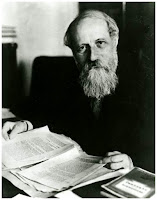
Understanding Why We Sin and Disbelieve We see people but hardly ever meet them. We talk to them but hardly ever communicate our soul or enter into a genuine dialogue with them. We owe everything to the other and hardly ever realize this and no wonder we are all lonely and are reduced to being islands unto ourselves. To speak “we” word has become a convention. Even God who addresses us in every encounter with the other we fail to notice and no wonder our worship and devotion is mostly sham. Life is such a joy, such an ecstasy, such a communion of spirit for those who know who is the other addressing them or addressed by them. It is virtually God we meet everyday in homes and streets and offices. But few feel the thrill of heavenly vision ( deedar ) in greeting and talking to fellow humans. Martin Buber, arguably the most influential Judaic philosopher-mystic, may help us here. His meditations on what does it mean to say “I” and “Thou” and “we” are an education for life. May ...